I started making coconut curry chicken bowls on nights when I wanted one complete meal in a single bowl. Something warm. Saucy. Steady. No extra sides, no clutter on the counter. The first time I layered it all together, I ate it straight away, standing at the kitchen island, and knew I’d be making it again.
This bowl works because every layer has a purpose. Tender chicken, creamy coconut curry, and simple additions that balance each other without trying too hard. It feels filling but not heavy. Familiar but still interesting. Let me show you how these five simple layers come together to make this coconut curry chicken bowl one I keep craving.
Ingredients List
- Chicken breast or thighs, cut into bite-size pieces
- Coconut milk
- Curry powder or curry paste
- Olive oil
- Garlic, minced
- Onion, finely chopped
- Cooked rice (white or jasmine works best)
- Salt
- Black pepper
Optional layers and finishes:
- Lime juice
- Fresh cilantr
- Red chili flakes
- Steamed vegetables (like bell peppers or broccoli)
How To Cook Coconut Curry Chicken
Cooking the coconut curry chicken is my favorite part of this bowl. This is where the flavor settles in and everything starts to smell right. I keep the heat gentle and let things move at their own pace. No rushing. That’s how the sauce stays creamy and the chicken stays tender.
Cook the Chicken
The pan goes on medium heat with a little oil. Chicken pieces go in and get time to brown lightly. I don’t crowd the pan. I want color, not steam. Once the chicken is mostly cooked, I leave it right there.
Build the Curry Flavor
Onion and garlic go straight into the same pan. They soften quickly and pick up all that flavor left behind. Then the curry goes in. Just long enough to warm up and smell fragrant.
Add the Coconut Milk
Coconut milk comes next. I pour it in slowly and stir, making sure nothing sticks to the bottom. The sauce turns creamy right away and feels rich without being heavy.
Let It Simmer
I let everything simmer until the chicken is fully tender and the sauce thickens just a bit. Salt goes in at the end. A small taste tells me when it’s ready. Then it’s time to build the bowl.
5 Simple Layers
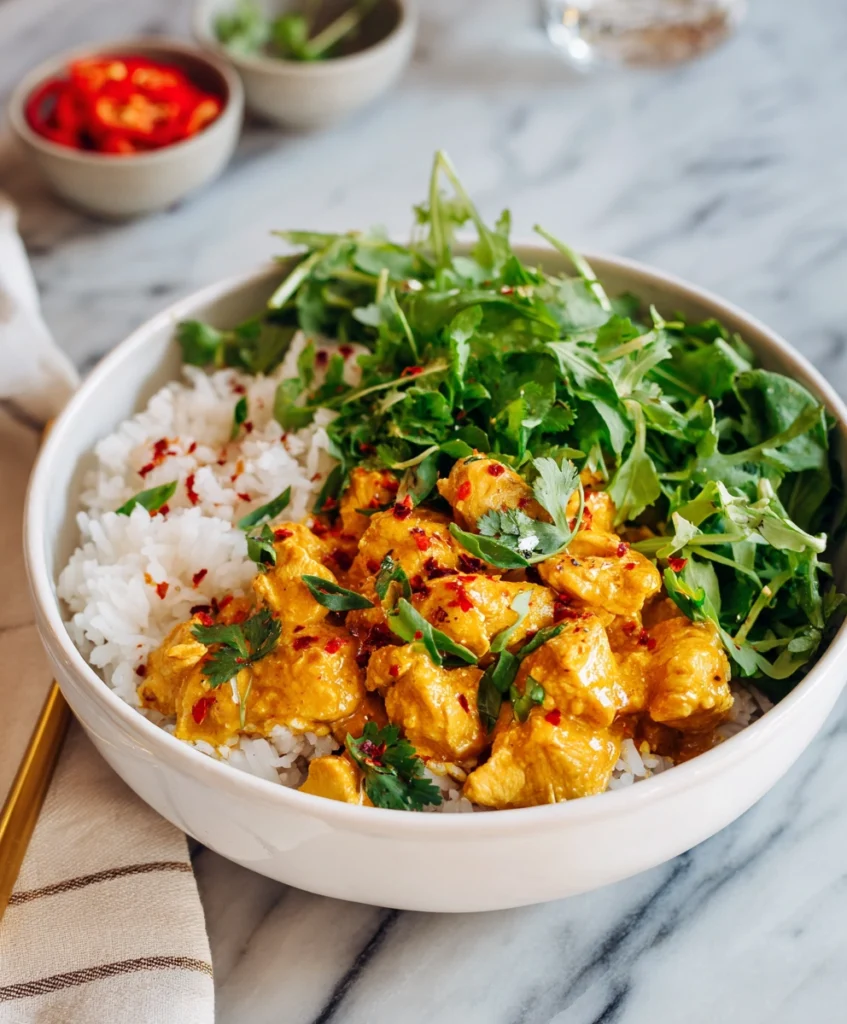
This bowl is built one layer at a time, and each one matters. I start with rice at the bottom. It gives the bowl shape and catches all that coconut curry sauce so nothing goes to waste. Plain rice works best here because it lets the flavors on top stay clear.
The second layer is the coconut curry chicken. Warm, tender, and fully coated in sauce, this is the heart of the bowl. Next comes the vegetable layer, something simple like bell peppers, broccoli, or spinach. It adds texture and keeps the bowl from feeling too rich. After that, I add a fresh element, usually herbs or a squeeze of lime, to wake everything up. The final layer is a light finish, like chili flakes or a drizzle of extra sauce, just enough to bring all the layers together without overpowering them.
How I Thicken Curry Sauce
I usually thicken curry sauce slowly and without forcing it. Letting it simmer uncovered does most of the work. The coconut milk reduces, the flavors concentrate, and the sauce starts clinging to the chicken instead of pooling at the bottom of the pan. It takes a few extra minutes, but it keeps the texture smooth and natural.
If I want it thicker than that, I keep it simple. A spoon of coconut milk simmered a little longer, or letting the chicken sit in the sauce off the heat, both help it tighten up. I avoid adding flour or cornstarch unless I really have to. I like when the sauce feels rich on its own, not heavy or pasty.
My Favorite Proteins to Use in Curry
Chicken is what I reach for most when I’m making curry. It cooks gently, soaks up the sauce, and stays tender without much effort. Thighs are my favorite because they stay juicy, but breast works too when I want something lighter. Either way, chicken lets the curry stay front and center without fighting for attention.
When I want to switch things up, shrimp and chickpeas are the first alternatives I think of. Shrimp cook fast and bring a clean, slightly sweet bite that works really well with coconut curry. Chickpeas are great when I want something plant-based but still filling. They hold their shape, drink in the sauce, and make the bowl feel complete without needing anything extra.
Storage Tips
I always let the curry cool fully before storing it. Putting it away while it’s still hot can thin the sauce and create extra moisture inside the container. Once cooled, I transfer it to an airtight container and keep it in the fridge, where it stays good for up to 3 days. The flavors settle overnight, so leftovers often taste even better.
For reheating, low and slow is the key. I warm it on the stovetop over low heat, stirring occasionally, and add a small splash of water or coconut milk if the sauce has thickened too much. Avoid high heat or the microwave on full power, since that can cause the coconut milk to separate and make the chicken dry.
Nutritional Information
I like having a rough idea of the nutrition with this bowl, mostly because it feels satisfying without being too heavy. The coconut milk makes it rich, but the balance of protein and simple layers keeps it steady and filling. Here’s an approximate breakdown for one serving of the coconut curry chicken bowl.
Calories: 460 kcal
Protein: 28 g
Fat: 30 g
Saturated Fat: 18 g
Carbohydrates: 20 g
Fiber: 3 g
Sugar: 4 g
Cholesterol: 85 mg
Sodium: 620 mg
Frequently Asked Questions
Can I cook the curry longer without ruining it?
Yes, as long as the heat stays low. A gentle simmer is your friend here. The sauce gets deeper in flavor, and the chicken stays tender instead of tightening up.
What makes this curry taste balanced and not flat?
It’s the layering. Cooking the spices briefly before adding coconut milk matters more than it sounds. That small step gives the curry warmth and depth instead of a one-note taste.
Is this curry meant to be thick or pourable?
Somewhere in between. I like it thick enough to cling to the chicken but still loose enough to sink into the rice. If it coats the back of a spoon, it’s right where it should be.
Can I adjust the flavor without changing the recipe?
Definitely. A squeeze of lime at the end brightens everything. A pinch of salt brings the sauce into focus. Small tweaks at the finish can change the whole bowl.
Why does the curry taste better after resting?
Because the sauce settles. Once it’s off the heat, the flavors calm down and blend together. Even five minutes of rest makes it taste more rounded and complete.
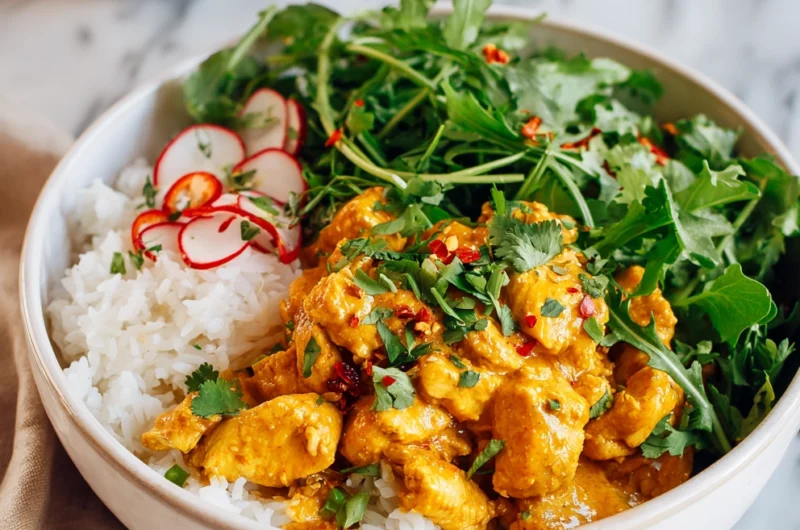
Coconut Curry Chicken Bowl: 5 Simple Layers
4
servings15
minutes30
minutes1840
kcalA warm and comforting coconut curry chicken bowl built with simple layers. Tender chicken simmered in creamy coconut curry, served over rice and finished with fresh, balanced toppings for an easy, satisfying meal.
Ingredients
Chicken breast or thighs, cut into bite-size pieces
Coconut milk
Curry powder or curry paste
Olive oil
Onion, finely chopped
Garlic, minced
Cooked rice (white or jasmine)
Salt, to taste
Black pepper, to taste
Directions
- Heat olive oil in a pan over medium heat and cook the chicken until lightly golden and mostly cooked through.
- Add onion and garlic to the pan and cook until soft and fragrant.
- Stir in the curry powder or paste and cook briefly to release the spices.
- Pour in coconut milk, lower the heat, and let the chicken simmer until tender and the sauce thickens slightly.
- Season with salt and pepper.
- Serve the curry over cooked rice and layer with vegetables and fresh toppings as desired.
Notes
- Keep the heat gentle while simmering to prevent the coconut milk from separating.
- The curry thickens more as it cools, so avoid over-reducing.